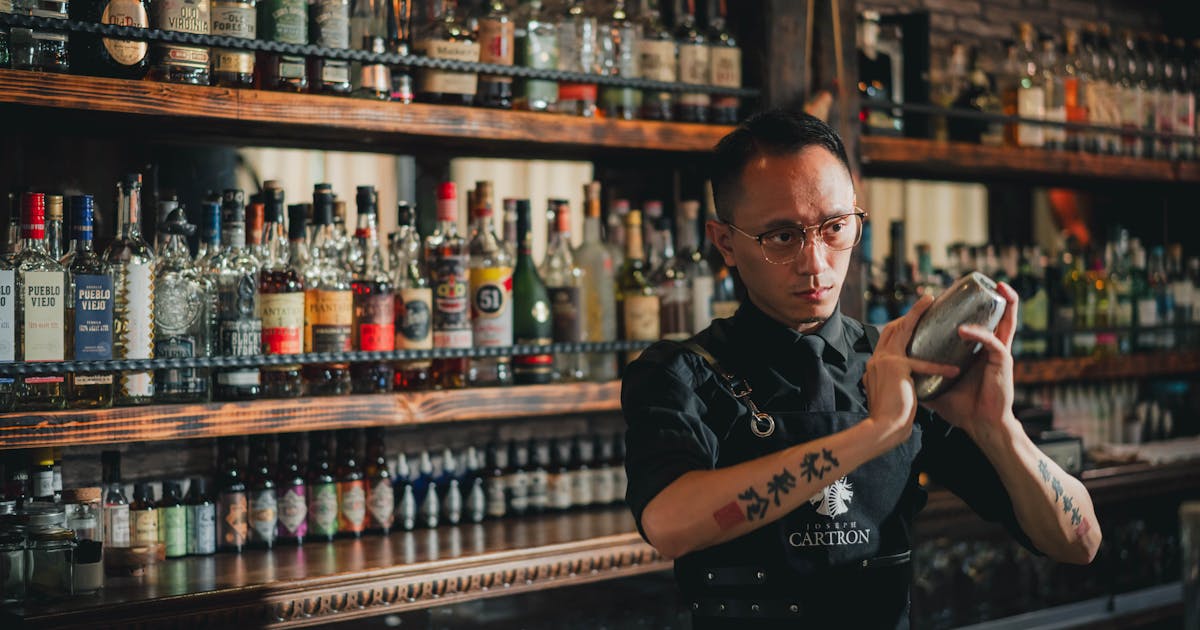
Tales of the Cocktail Foundation awards four scholarships to up-and-coming bartenders to attend the BAR 5-Day Program, valued at $4,000 each.
Your Education Doesn't Stop at Graduation
Completing a bartending program is a significant accomplishment and a genuine foundation for a professional career. But the bartenders who reach the industry's highest levels — bar director at a celebrated restaurant group, brand ambassador for a major spirits company, national competition champion, beverage consultant — got there by treating graduation as a beginning, not an endpoint.
The good news: there are more formal pathways for continuing bartending education than most new graduates realize. This guide maps them out, from scholarships and competitions to apprenticeship-style programs and mentorship networks.
Scholarships: Funding Your Growth
The spirits and hospitality industries offer a range of scholarship programs for working bartenders and hospitality professionals. These are not well-publicized, and many go undersubscribed simply because eligible candidates don't know they exist.
Industry Foundation Programs
Several non-profit foundations and trade organizations offer scholarships specifically for hospitality professionals seeking continuing education. These typically cover costs for:
- Advanced spirits certifications (WSET Level 2 and 3, Certified Sommelier)
- Industry conference attendance and education programs
- College-level business courses for bartenders pursuing management roles
How to find them: Contact your local bartending guild, restaurant association, or hospitality trade organization. Spirits distributors are also a reliable source of information — brand representatives often know about scholarship programs from the companies they represent.
Brand-Sponsored Education Programs
Major spirits brands — particularly premium whiskey, rum, and gin producers — invest heavily in bartender education as a marketing strategy. These programs frequently include:
- All-expense-paid distillery trips — seeing production firsthand is some of the best spirits education available, and brands regularly invite working bartenders on these experiences
- Education stipends for WSET or other certification costs
- Annual scholarship competitions that award cash prizes or education funding to outstanding bartenders
Eligibility typically requires being employed at a licensed bar or restaurant. Build relationships with your local brand ambassadors and ask specifically about education programs.
Competitions: The Career Accelerant Nobody Tells You About
Cocktail competitions are the most underutilized career accelerant in the industry, particularly for early-career bartenders who assume they are not yet ready. The reality: you are probably more ready than you think, and the preparation process itself is the point.
What Competition Entry Actually Does for Your Career
Forces deliberate recipe development. You cannot enter a competition with a drink you made up on the spot. You have to create, refine, taste, adjust, and finalize a cocktail over weeks or months. This process teaches you more about balance and ingredient interaction than any other exercise.
Gives you a narrative. Competitions require you to explain your drink — its concept, its ingredients, your choices. This skill transfers directly to menu writing, guest interactions, and job interviews.
Builds your network. The bartenders you meet at competitions become long-term industry connections. Judges at competitions are often senior industry professionals who remember standout competitors.
Creates visible credentials. Even a regional placement is a credential. It signals to employers that you take your craft seriously enough to submit it to external evaluation.
Types of Competitions to Pursue
Brand-sponsored national competitions — The most prominent competitions in the industry, typically organized by a single spirits brand and run regionally before culminating in a national final. Open to licensed bartenders nationwide. Search for these through spirits brand websites and distributor reps.
Regional and local competitions — City-level events organized by bartending guilds, hospitality associations, or event producers. Excellent entry points with less intimidating formats and more direct community visibility.
Category-specific competitions — Some competitions focus on a specific spirit category (American whiskey, tequila, rum) or a specific format (speed bartending, flair, mixology). Specializing in a category competition can establish you as a known name within that spirits community.
Charity competitions — Lower-stakes events that still require recipe development. These are excellent first-competition experiences.
Apprenticeship and Mentorship Pathways
Formal apprenticeship in bartending — structured, supervised training under an experienced professional — is less common in the United States than in Europe, but it exists in various forms and the landscape is growing.
Stage Programs (Pronounced "staazh")
Borrowed from the culinary world, a stage is an unpaid or low-paid work period at a bar you want to learn from. You work alongside the established team, observe their program, and absorb their approach in exchange for your labor and their knowledge.
How to pursue a stage:
- Identify 2–3 bars whose programs you genuinely admire
- Contact the bar manager or head bartender directly with a brief, professional note explaining who you are and what you hope to learn
- Be specific about the time commitment you can offer
- Approach it as a student, not an applicant — you are there to learn, not to audition
Stages are how many of the industry's best bartenders developed their skills before formal programs were widely available. They remain one of the most effective ways to access expertise that cannot be found in a classroom.
Guild Mentorship Programs
Bartending guilds in larger cities increasingly offer structured mentorship programs that pair newer bartenders with established professionals. These programs vary in formality — some involve regular scheduled meetings, structured curriculum, and formal evaluation; others are more loosely organized.
The value of a guild mentorship over an informal relationship:
- Access to mentors outside your immediate employer's network
- Structured accountability for both mentor and mentee
- Introduction to the broader professional community the guild serves
Contact your city's bartending guild directly to inquire about mentorship program availability.
Advanced Certifications as Career Waypoints
Certifications function as waypoints in a bartending career — tangible evidence of knowledge depth that employers, event producers, and consulting clients recognize.
The most career-relevant certifications:
- WSET Level 2 Award in Spirits — Broadly respected, covers all major spirits categories, accessible to anyone without prerequisites
- WSET Level 3 Award in Spirits — More rigorous, requires written examination, marks you as a serious spirits professional; opens doors to brand ambassador and consulting roles
- Certified Sommelier (Court of Master Sommeliers) — Primarily wine-focused but covers spirits; highly respected in fine dining contexts
- Cicerone Certified Beer Server and Beer Sommelier — Essential for craft beer-focused venues and brewery-adjacent bartending positions
Build a certification roadmap that aligns with where you want your career to go. A bartender targeting craft cocktail bars benefits most from spirits certifications; one targeting fine dining benefits from wine and sommelier credentials.
Building a Five-Year Career Map
The bartenders who reach senior roles fastest are those who treat their career as something they design, not something that happens to them. A rough five-year framework:
- Year 1: Establish yourself in a working bar environment. Learn the operation, build speed, develop your palate.
- Year 2: Pursue your first certification (WSET Level 2 or equivalent). Enter one regional competition.
- Year 3: Pursue an advanced certification or a stage at a venue you admire. Build a competition portfolio.
- Year 4: Target a bar lead or head bartender role. Contribute to a menu development cycle.
- Year 5: Evaluate where you want to specialize — management track, brand work, competition circuit, or your own concept.
These timelines are flexible, and many bartenders move faster. The point is to have a direction.
Start Here
Every advanced career in bartending starts with the same foundation: comprehensive training, a professional attitude, and the ambition to keep learning. At ABC Bartending College, we provide that foundation — and connect students to the network and resources they need to accelerate everything that comes after. Find a program near you and start building the career you want.